
Your AI agent needs a context contract
Fresh context helps. Knowing which context to trust matters more.

Hi, before we continue, a quick word from our sponsor.
Is your secrets strategy ready for AI agents?

Save your seat for Infisical’s webinar on July 22.
Now, back to infrastructure and AI.
Last issue, we shared a three-part test for AI workflows:
Fresh context. Clear validation. Reusable workflows.
This week, let’s stay with the first one.
Giving an agent access to current information does not automatically mean it has the right information.
Imagine an agent reviewing an infrastructure change. It can access the live configuration, an old architecture diagram, several runbooks, a recent incident ticket, and a Slack thread describing a temporary workaround.
Technically, the agent has plenty of context. Operationally, it has a trust problem.
Which source should it prioritize?
How recent is recent enough?
What should happen when two sources disagree?
What the agent needs is a context contract.
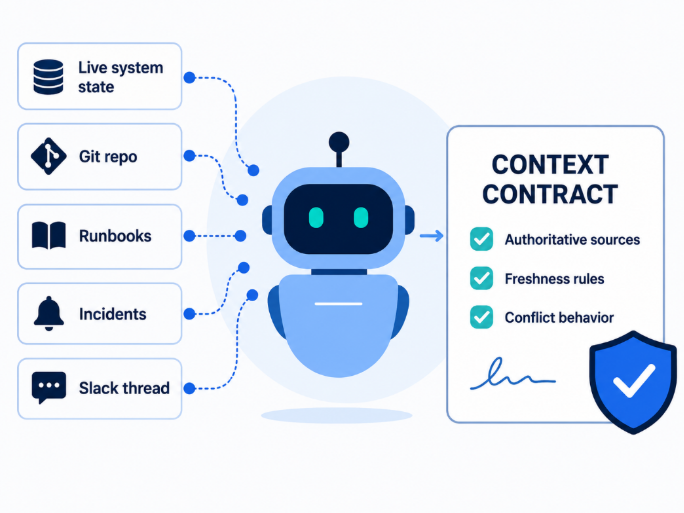
A context contract defines three things before the workflow starts.
1. Which source is authoritative?
Not every document deserves equal weight. Define a clear order, for example:
Live system state
Version-controlled configuration
Approved runbooks
Incident and change records
Informal discussions
The agent shouldn’t have to guess what wins.
2. How fresh must the information be?
“Current” depends on the task, for example:
A troubleshooting agent may need device state from the last few minutes.
A capacity-planning workflow may be fine with yesterday’s data.
A policy document may remain valid for months.
Set a freshness threshold. If the available context is older, the agent should flag it rather than quietly reasoning from stale information.
3. What happens when sources conflict?
Conflict is normal. The running configuration may not match Git. A runbook may describe a process that the latest incident proved incomplete.
The safest rule is simple:
If live state and the approved source of truth disagree, stop, show the conflict, and request human review.
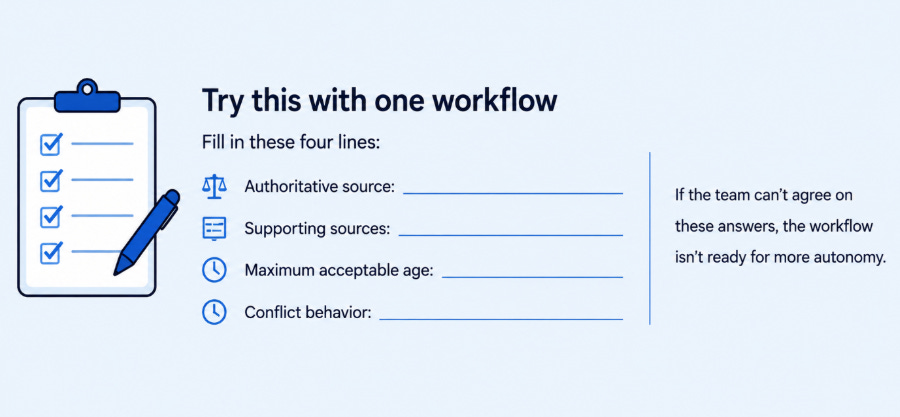
Fresh context is not about connecting an agent to everything. It is about giving it the right sources, in the right order, with clear rules for handling uncertainty.
Thanks,
Sayali
Editor-in-Chief
P.S. What source does your team trust when the documentation, Git repository, and live environment disagree? Reply and tell us how you resolve it. Your approach may help shape a future issue.
Both sessions point to the same issue from different angles.

Agentic DevOps with Claude - Thursday, July 23rd · 11:00 AM EDT
Michael Rishi Forrester (Accenture) helps you build a live, 33-component AI-native Kubernetes platform in four hours, so you walk away with a working IDP you can clone and run Monday, not another slide deck. You’ll also get a reference architecture showing exactly where agents and MCP servers belong in your stack, something most teams are still guessing at.
AI-Powered GitOps & Platform Engineering - Thursday, July 30th · 11:00 AM EDT
Taylor Dolezal (Head of OSS at Dosu) helps you pinpoint exactly where AI agents earn their keep in GitOps workflows, drawn from patterns across 100,000+ repos Dosu supports. You’ll also walk through a live demo comparing fresh vs. stale knowledge, so you can see the token-cost and accuracy tradeoffs before you build anything.
Book now →
Given this is fast becoming a must-know skillset for every platform and DevOps engineer, grab the Bundle Pass for both sessions at 40% off instead of buying separately
Before you go, a book worth having on your shelf
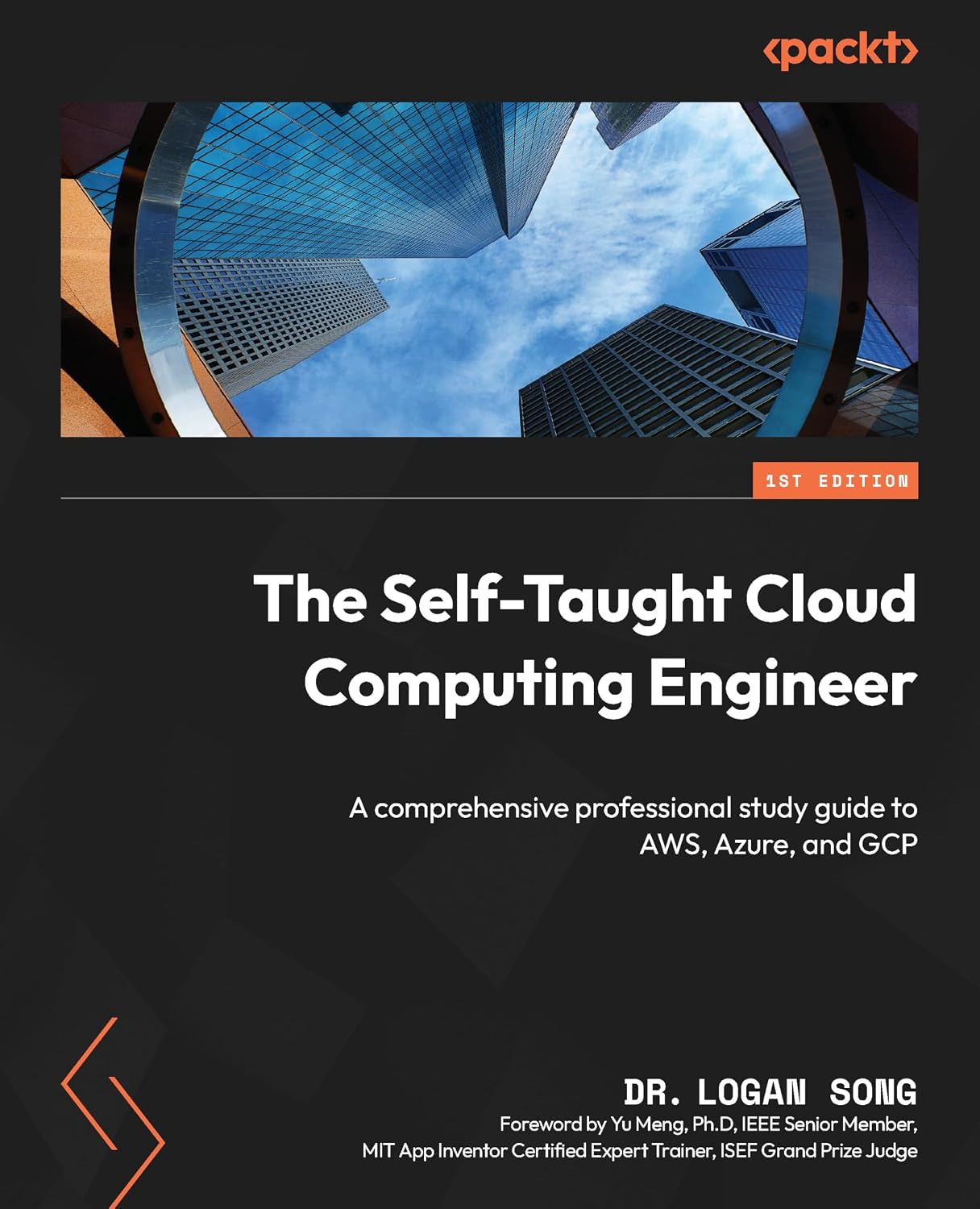
If this issue made you realize your AWS/Azure/GCP fundamentals could use a refresh, The Self-Taught Cloud Computing Engineer by Dr. Logan Song is a solid pick. It’s a structured, hands-on guide covering compute, storage, networking, data, security, and AI across all three major clouds, rated 4.8★ from over 350+ readers.